


AI-Powered Search Selects the Winners: How Brands Must Adapt to the Future of SEO
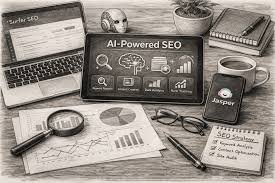
SEO strategies for AI search engines in 2026: The search landscape is undergoing a radical transformation. Traditional SEO strategies, which once focused on ranking and keywords, are no longer enough. Today, visibility depends on your content being found, ranked, and ultimately selected by AI-powered search engines. SEO strategies for AI search engines in 2026, This shift is redefining how brands approach digital marketing, content creation, and search engine optimization.
A recent session at SMX Now highlighted this evolution, with experts from iPullRank presenting a powerful new framework for success in this area. Their message was clear: AI-powered search doesn’t just rank content; it selects the winners.
The Rise of AI-Powered Search
AI-powered search engines, including generative search experiences, are changing how users interact with information. Instead of presenting a list of links, AI now synthesizes answers by extracting information from multiple sources, analyzing context, and providing direct responses.
This means:
- Users may never access websites via the internet.
- Content must be structured for AI interpretation.
- Visibility depends on selection, not just indexing.
In this new ecosystem, brands must rethink their SEO strategies. It’s no longer about appearing on the first page, but about being part of the answer.
From SEO to GEO: A New Era of Optimization
The concept of Generative Search Engine Optimization (GEO) is emerging as the next evolution of SEO. SEO strategies for AI search engines in 2026, GEO focuses on optimizing content for AI-powered systems that generate answers, rather than simply ranking pages.
According to iPullRank experts, GEO requires a deeper understanding of how AI systems retrieve and evaluate content. This includes:
- Structuring content in a machine-readable way.
- Be consistent with search intent at multiple levels.
- Maintain credibility and authority indicators.
GEO doesn’t replace SEO, but rather complements it. It builds upon traditional practices and adapts them to an environment where AI is paramount.
Understanding query expansion: SEO strategies for AI search engines in 2026
One of the most important concepts in AI search is query expansion. When a user enters a query, artificial intelligence (AI) doesn’t just search for that exact phrase, but generates multiple related queries to gather broader information.
For example, a search might include:
- Related subtopics
- Contextual variations
- Intent-based questions
This process allows AI to construct a comprehensive answer. However, it also means that the content must be consistent across many variations of the question to be considered.
To be successful, features must:
- Address topics holistically
- Use natural language and semantic keywords
- Include related questions within the content
Doing so increases the likelihood that the content will be included in the AI’s information gathering.
Relevance Engineering Schema (r19g)
To help brands manage this complexity, iPullRank has introduced the Relevance Engineering Schema (r19g). This methodology aims to optimize content at every stage of search engine optimization (SEO) using artificial intelligence.
The scheme focuses on three main areas:
1. Discovery
Your content must first be discovered by AI systems. This involves:
- Solid technical SEO optimization
- Proper indexing and crawlability
- Use of structured data
Without discovery, your content has no chance of being selected.
2. Selection
Once discovered, AI evaluates the content based on its relevance, quality, and context. Factors influencing selection include:
- Depth and clarity of content
- Alignment with user intent
- Indicators of authority and trust
This level determines whether your content is used in AI-generated responses.
3. Impact of Citations
Finally, if your content is selected, it can be cited or referenced in AI responses. This is where true visibility comes into play.
To improve the effectiveness of citations:
- Provide clear and concise answers.
- Use authoritative sources and data.
- Structure your content for easy retrieval.
AI citations are the new way to rank highly.
Why Geolocation Success Isn’t One-Stop Shop
The main takeaway from the SMX Now session is that geolocation success requires customization. SEO strategies for AI search engines in 2026, There is no single strategy that works for every brand or industry.
More importantly, brands should:
- Continue testing and refining their strategies.
- Analyze performance across multiple queries.
- Adapt content based on AI behavior.
This iterative approach is essential because AI systems are constantly evolving.
The Importance of an Omnichannel Content Strategy
Another key takeaway is the need for an omnichannel content strategy. AI research isn’t based on a single source; it draws from multiple platforms, formats, and channels.
This means your content should be present on:
- Blogs and websites.
- Social media platforms.
- Video content.
- Industry publications.
By diversifying your content presence, you increase the likelihood that AI systems will find and select it.
Practical Steps for Brands
To facilitate AI-driven research, brands should focus on the following helpful strategies:
1. Create Comprehensive Content
Instead of focusing on individual keywords, create content that covers entire topics. Think in terms of groups and ecosystems rather than individual pages.
2. Optimize Natural Language
AI systems prioritize conversational and contextual content. Write in a way that mimics how people speak and ask questions.
3. Use structured data
Structured data helps AI understand your content more effectively. Use schema markup to improve visibility.
4. Build authority and trust
E-E-A-T (Expertise, Knowledge, Authority, Trust) remains critical. Ensure your content is credible, well-documented, and supported by reliable sources.
5. Measure beyond ranking
Traditional metrics, such as keyword rankings, are no longer sufficient. Focus on:
- Discovery reasons
- Select frequency
- Citation visibility
This three-tiered measurement model aligns with how AI evaluates content.
The future of search is AI-powered
The transition to AI-driven search isn’t temporary; it’s the future. As generative technologies continue to evolve, brands that fail to adapt risk losing visibility entirely.
The ideas shared at SMX Now make it clear that success in this new era requires a proactive approach. By embracing geolocation, using frameworks like r19g, and focusing on AI-driven optimization, brands can stay ahead of the competition.
Conclusion:
AI-powered search is radically changing the rules of SEO. Visibility is no longer about where you rank, but about choosing whether to rank at all. SEO strategies for AI search engines in 2026, With concepts like query segmentation, generative optimization, and relevance engineering transforming the industry, brands must evolve their strategies to remain competitive.
By focusing on the discovery, selection, and impact of quotes, and adopting a flexible, data-driven approach, businesses can position themselves as leaders in an AI-powered search system. Brands that understand these changes today and act accordingly will be the ones that lead the digital landscape of tomorrow.
You May Also Like…