
Google to no longer support FAQ
What Does It Mean for Your Website?
Google will no longer support rich results : In a major shift for search engine optimization (SEO), Google has announced the end of support for rich FAQ results, effective May 7, 2026. From that date, these rich sections—those helpful expandable question and answer boxes that appear directly in Google search results—will disappear entirely from the platform. The change extends beyond the search interface: Google Search Console will stop reporting on structured FAQs, removing a key tool for monitoring and fixing these elements.
Official Google Statement
The announcement was made quietly, yet authoritatively, via a prominent note at the top of Google’s Structured FAQ Developer Documentation page. For those following the official source, here are the exact words:
Rich FAQ results will no longer appear in Google Search. Google will no longer support rich results (FAQs), We’ll be removing the FAQ feature from Search, Rich Results Reporting, and Rich Results Testing Help in June 2026. To allow time for API calls to adapt, support for FAQs in Rich Results will be removed from the Search Console API in August 2026.
This phased rollout gives website owners a clear timeline: the immediate disappearance of the feature from Search Results (May 7, 2026), followed by the removal of reporting features in Search Console and the Rich Results Testing Tool in June, and finally, the discontinuation of the API in August. Google’s approach is methodical, allowing developers to adapt without sudden disruptions.
Should you remove FAQs with structured data?
In short: It’s optional, but worth considering. Google explicitly states that you can remove structured data FAQs from your pages if you wish, but keeping them won’t affect your site’s indexing or basic visibility in Google Search. Why? Structured data, such as JSON-LD or microdata for FAQs, follows open standards, and other search engines—like Bing, Yandex, and even newer competitors—can still interpret and use them.
For web developers, this means there’s no rush to optimize the code. If your site uses a content management system (CMS) like WordPress with FAQ plugins (such as Ultimate Blocks or Structured Content) or custom JavaScript implementations, test a few pages first. Tools like Google’s Structured Data Testing Tool (as long as it still supports FAQs) or third-party validators can confirm that your markup is still valid. However, optimizing it can simplify the code, Google will no longer support rich results (FAQs), reduce page size, and prevent future confusion, especially if you’re reducing HTML to improve efficiency.
That said, keeping it has its advantages. Other search engines besides Google can use it for their own rich results, voice search (for example, through integrations with Siri or Alexa), or even AI-powered summaries in tools like Bing Chat. In a multi-platform world, maintaining schema.org markup ensures the future relevance of your content.
You May Also Like…
Google Nexus introduces an AI overview and a revamped AI mode.
SEO Impact: Why is it important?
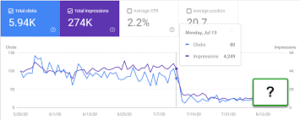
Rich results have long been a powerful source of traffic. These enhanced elements—carousels, accordions, or Google will no longer support rich results (FAQs), FAQ sections—increase click-through rates (CTR) by making your page stand out from the monotony of blue links. Google will no longer support rich results (FAQs), Studies in recent years, such as those by Ahrefs and Search Engine Journal, have estimated that rich results with FAQs provide between 5% and 20% higher CTR for relevant pages, especially in competitive niches like e-commerce, health, and finance.
FAQs stand out because they directly address user intent. Imagine a customer searching for “best running shoes for flat feet”: rich results like FAQs could discourage clicks by predicting your answers. Since Google is removing this feature, organic traffic to pages using it is likely to decrease. Those who implemented it after 2020 (when Google launched it) will probably experience the most drastic effects.
Why the change? Google hasn’t explained, but It is speculated that this is due to abuse by spammers.
FAQ schemes were notoriously easy to copy: sparse content fields filled pages with numerous low-value questions and answers, polluting the results. Coupled with the rise of AI-generated summaries (Google’s generative search summaries), rich results, such as FAQs, are too often intersected with automated extracts. This aligns with Google’s overall strategy of prioritizing helpful, people-first content over manipulative headlines.