
How Is Artificial Intelligence Affecting Local Search, and What Tools Should We Use To Move Forward?
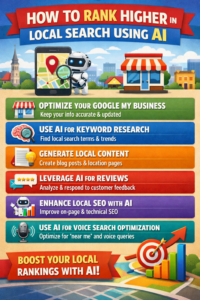
How To Rank Higher In Local Search Using AI; Local customers interact with and use AI in a variety of ways. Therefore, local brands must adapt their tools to capture the changes in search habits: AI has transformed organic search at the local level. This guide will help local brands access available data to filter out irrelevant AI information and learn how to track actual customer behavior.
AI vs. Traditional Search: Key Figures
AI proponents might easily convince you that their products have replaced all previous technologies. However, the numbers tell a different story. According to original data from an August 2025 Sparktoro study, only 20% of Americans use AI tools more than once a month, while 40% access them only once a month. How To Rank Higher In Local Search Using AI: Despite the industry hype claiming that AI is “eliminating” traditional search and that SEO is “dead,” Sparktoro reports that 95% of Americans interact with traditional search engines like Google every month. In fact, Semrush discovered that as new users adopt ChatGPT, Google search usage increases:
In the study, Rand Fishkin, founder of Sparktoro, states:
“In my opinion, traditional search isn’t going away, not even for those aggressively adopting AI. The more data we collect, the more convinced I am that the ‘AI vs. Search’ narrative is largely an invention of the media and influencers seeking attention, rather than a true reflection of reality.”
He adds:
“Growth/adoption appears to be slowing over time, as the AI tools we analyzed (ChatGPT, Claude, CoPilot, Gemini, Perplexity, and Deepseek) haven’t had a month with more than 1.1x growth since September 2024. This doesn’t mean AI tools aren’t gaining users, but rather that the rate of growth is slowing.”
Artificial Intelligence vs. Traditional Local Search: Comparative Data
In the context of local search, there are three different scenarios that AI users typically encounter:
- Searching directly in a conversational AI tool like Google AI Mode or Chat GPT. For example, in Google AI Mode, the query “who sells the cheapest tacos in San Francisco?” displays diverse information gathered from multiple sources.
- Local search intent has been detected, and results are already displaying AI-powered information. The query “How much do tacos cost in San Francisco?” will likely display AI-powered information at the top of Google’s organic search results pages (SERPs), again showing content pulled from various sources.
- Using Google Maps: The Google Maps app is the built-in mapping application on Android devices. Starting in Q4 2024, Google has been rolling out various AI-powered local search features in the app. These include review summaries and “Ask about this place” suggestions. Recently, Dave DiGregorio discovered the “Learn before you go” feature, and Joy Hawkins shared it on LinkedIn. Google is likely to roll out more features over time.
What local business owners and digital marketing companies need to know is the level of interaction potential customers have with AI.
The original Q2 2025 study by Whitespark collected the following data on the prevalence of AI Reviews in local searches:
- AI Reviews appeared in 68% of local searches.
- The prominence of AI Reviews appears to be based on industry rather than geographic location. For example, searches for information related to lawyers showed the same level of prominence in AI Reviews, regardless of whether the user was located in San Francisco, Seattle, or New York.
- Local bundles appeared in 39% of searches. This percentage is significantly lower than the percentage of searches with AI Reviews prominence (68%).
- There appears to be an inverse relationship between local bundles and AI Reviews with respect to search intent.
AI Reviews appear most frequently in informational searches and searches with hybrid intent. On average, AI Reviews appeared in only 15% of simple local searches, such as “tacos in Francisco,” but in 92% of informational searches, such as “how long does an eye exam take near me?” and for 97% of hybrid-intent searches, such as “average cost of dental implants in Phoenix.” Local bundles are the most relevant results for simple queries.
How To Rank Higher In Local Search Using AI: On average, “local bundles” appeared on Google for over 90% of simple local-intent searches, such as “primary care clinic in Phoenix.” Notably, since the Whitespark study (in which I participated), I’ve observed an increase in local bundles and AI overviews that appear to be more consistent across many queries. This warrants further investigation to identify trends.
How Artificial Intelligence (AI) Is Transforming Local Searches on Traditional Search Engines Like Google
The introduction of Google AI Reviews in 2024 has had a significant impact on the search experience. Notably, for a variety of queries, local users now frequently encounter this feature on the search engine results page (SERP).
For example, a more complex query like “Are there any Mexican restaurants near Golden Gate Park?” will likely display an AI Review like this:
The advantage of this relatively new dynamic is that AI Reviews can cite content about local businesses from both their own websites and third-party platforms. The search example above pulls content from Reddit, Yelp, and a local restaurant’s website.
This means that brands that have built a digital presence with unstructured citations (mentions of a business on third-party websites) could gain greater visibility and be found more often in AI Reviews.
However, the disadvantages of this dynamic can outweigh the advantages for several reasons:
- AI-generated misinformation (illusions) about brands can mislead customers and drive conversions and transactions for local businesses. GatherUp found that 67% of customers don’t carefully check AI sources before choosing a local business. This is problematic because AI illusions can provide false information about local brands.
- It’s more difficult to track customer experience in AI summaries than in traditional local packages, making it harder to understand improvements in Google My Business profile optimization and unstructured quote development: each consumer may see different information in AI summaries.
- The AI summary experience is more extensive and less intuitive than traditional local packages, which could lead to a worse user experience rather than an better one.
A Troubling Look at Google’s AI Summaries: Hallucinations
Google’s plan to fill search engine results pages (SERPs) with AI summaries may not improve the local search experience. The most troubling phenomenon is the so-called “hallucination,” which occurs when AI generates false information.
How To Rank Higher In Local Search Using AI; A good example shows how AI can be tricked into generating almost any claim, as in the following image that appears to show a sporting goods store with a bed bug infestation:
To be clear, we are not aware of any reports of bed bugs at this reputable sporting goods store, and Google’s AI summaries do not cite any sources reporting an infestation anywhere in the business, but customers may believe this problem is real because the AI summaries make it seem real.
Given the enormous amount of money brands invest in building and managing their online reputation, it is incredibly frustrating to learn that AI summaries systematically misrepresent information about local businesses.
This situation may seem contradictory to Google’s policy of creating user-first content, especially when compared to the more intuitive experience offered by Google’s Local Packs.
How Artificial Intelligence Affects Local Packs: How To Rank Higher In Local Search Using AI
For the past two decades, Google has displayed local business results as Local Packs in response to local-intent queries.
For example, a user searching for “tacos near Golden Gate Park in San Francisco” will typically see a list of businesses and a map similar to this:
Advantages of Local Listings
Local listings concentrate much of the necessary content into a relatively small and well-organized space on your desktop.
At a glance, customers can see the available options for nearby businesses: their name, location, reputation, and much more.
Much of this information comes from creating and managing free Google My Business profiles, giving many businesses the opportunity to promote themselves.
Disadvantages of Local Listings
Local listings operate in a competitive environment. Businesses that achieve good visibility can significantly outperform their less active competitors in terms of visibility, conversions, and sales.
Furthermore, they are vulnerable to modifications and irrelevant messages from third parties, which puts the accuracy and reputation of local business data at risk. And, when problems arise with Google My Business profiles and local listings, the lack of dedicated Google support staff can make the resolution process very slow and frustrating.
Despite these drawbacks, local ads have been successfully adopted by customers. How To Rank Higher In Local Search Using AI: It’s worth noting that GatherUp found that 50% of customers consider Google’s local platform to contain reliable reviews, and 98% consult reviews before choosing a local business to make a purchase. Google has hit the mark with local ads.
Similar results for local ads in Google’s AI Mode
Undoubtedly, the historical success of local ads explains why Google is incorporating similar results into its AI Mode.
Here’s what we see for our same ad for “tacos near Golden Gate Park, San Francisco”:
His theory on why this fluctuation occurs:
“I’m seeing more and more AI summaries in search results where local businesses appear, but Google isn’t showing the local archive. This means there’s no local archive in the organic results, which causes significant fluctuations in the ranking of some businesses.”
Google will undoubtedly continue experimenting with various versions of the AI Overview/Local Archive, and this is something to keep in mind when analyzing how your local business appears in search results.
Currently, AI Overviews and AI Mode lack the organization and familiarity of local archives. If Google decides to abandon the local archive format at some point, this could increase or decrease impressions, clicks, and conversions for Google My Business profiles, depending on user perception of the results.
AI Overviews are consuming traffic from local archives.
There has always been a prevailing idea in the local SEO industry that as long as customers are coming to local businesses and sales are good, it doesn’t matter which specific interface is used.
In other words, should a mechanic shop care if a customer finds them through organic search results, a local package, the Google Maps app on their phone, a social media recommendation, or a city map, as long as the business thrives?
But it’s important to know which channels perform best, as this will help allocate resources to the platforms that generate the most business.
For this reason, it’s important to understand how AI-powered Reviews are driving sales of local packages. Andrew Shotland has done a good job reporting on this, using this chart to show the decrease in local package impressions due to AI-powered Reviews:
How Artificial Intelligence (AI) Affects Traditional Organic Results
New AI overviews are large and take up a lot of screen space. This means that if they appear instead of or alongside local listings, they push organic results down the page.
This degradation of organic results leads to fewer impressions and clicks from Google’s SERPs to local business websites.
This represents a loss of power for local brands, as they are unable to offer as good a user experience. It’s very likely that fewer people will access their websites from Google.
How AI Is Changing Local SEO in LLM Tools
Previously, SEO and local businesses focused primarily on visibility in traditional search engines like Google, Bing, and Yahoo. Now we need to incorporate LLM tools, analyzing search terms such as:
- ChatGPT
- Google AI Mode
- Grok
- Perplexity
- Gemini
The general opinion in the industry regarding LLM tools is that they don’t offer a high-quality local search experience. For example, consider our enthusiasm for organic tacos near Golden Gate Park on ChatGPT:
Below, a map example illustrates why ChatGPT doesn’t offer a good local search experience. We searched for a single hotel, and when we asked the AI to show us a map (similar to what Google’s local packages offer), this is what we got:
The tool claims to show us a map, but instead, it shows us images and an address. How To Rank Higher In Local Search Using AI: There is no map. It’s not a useful experience.
ChatGPT occasionally displays a map, despite insisting it can’t.
The user experience is very inconsistent and poor quality, especially when compared to the usefulness of Google’s local packages or Bing Places.
You May Also Like…
Tools and Methods for Monitoring the Impact of AI on Local Businesses
While AI can misrepresent brands, monitoring and reviewing it can limit errors and prevent it from generating absurd results when it lacks real information (as in the cockroach example above).
Here’s a strategy and tools to monitor how artificial intelligence (AI) is impacting your local brand.
Continue monitoring traffic and user behavior.
Monitor your organic traffic for potential declines in impressions, clicks, average position, sessions, or conversions. This will help you identify sources where traffic is being lost due to changes such as the prevalence of AI reviews.
- Use Google Search Console to monitor impressions, clicks, and average position.
- Use Google Analytics to monitor sessions and conversions.
- Make sure you’re correctly using UTM codes in your Google Business Profiles (GBP) to access Google Search Console data on GBP metrics.
Start monitoring AI visibility.
Discover how AI users perceive your business.
- Use Mangools AI Search Grader to monitor your visibility on ChatGPT, Perplexity, Gemini, Grok, and more.
- Use Semrush AI Visibility to monitor your presence across multiple AI platforms and uncover key insights to boost visibility. Use LocalFalcon to monitor visibility on Google AI Overviews, Google AI Mode, ChatGPT, and other platforms.
Keep monitoring your ranking. While you already know that conversions and sales are the most important success indicators, traditional local and organic ranking can help you identify gaps in lead generation and conversions. The following trackers capture both local and organic ranking:
- Semrush Position Tracker and Map Rank Trackers
- Whitespark Local Ranking Tracker
- BrightLocal
- Track digital PR
Some marketers believe that PR is the future of digital marketing. Many AI platforms rely heavily on collecting PR-style content from sites like Reddit, Quora, Medium, and LinkedIn.
Semrush offers this window into the most cited domains in LLM, such as ChatGPT, Google AI Mode, and Perplexity.
For more information, see the article “The Most Cited Domains in AI: A Three-Month Study.”
Another study revealed the following:
“AI is more likely to recommend a brand when it’s mentioned on multiple pages of cited sources.”
To monitor brand mentions for a local business, use these tools:
- Semrush Brand Monitoring
- Brand Mentions
- AlertMouse
Duplicate Reputation Management
AI suggestions extract, summarize, and quote content from reviews. This example from AI Insights shows how Google relies, in part, on TripAdvisor reviews to generate its responses:
How To Rank Higher In Local Search Using AI; This type of review data can be obtained from various platforms, such as Google Business Profiles, Yelp, BBB, TrustPilot, Facebook, and others.
For this reason, local brands should use tools to professionally obtain, monitor, manage, analyze, and respond to their reviews across multiple third-party platforms. These tools include:
- GatherUp
- Semrush Review Management
Researching online brand mentions to succeed in AI environments
We’ve analyzed the new paths users take in local searches thanks to AI. Now, a compelling narrative is emerging for local businesses in the age of AI: unstructured quotes (brand mentions) play a critical role in LLM visibility.
If you’ve never been clear on the difference between structured and unstructured quotes and want to learn how to excel in both essential forms of content development, check out our guide on structured and unstructured quotes for local SEO.